Company News
Why Skid-Mounted Regasification Is Popular in Nigeria?
In recent years, skid-mounted LNG regasification solutions have gained strong traction in Nigeria, especially for small to mid-scale gas supply projects. Their compact footprint, short delivery time, and reduced site work make them attractive for users seeking fast deployment and simplified execution.
However, based on practical engineering experience, a single skid-mounted regasification configuration is not universally applicable. While popular, this approach comes with clear technical boundaries. Understanding when a single skid makes sense—and when it doesn’t—is critical to avoiding long-term operational and safety issues.
Why Skid-Mounted Regasification Is Popular in Nigeria?
Several market-specific factors explain the demand:
• Limited site space and infrastructure readiness
• Preference for fast-track projects with minimal civil work
• Desire for factory-assembled, pre-tested systems
• Short project decision cycles and tight commissioning schedules
Under the right conditions, a skid-mounted solution can indeed reduce engineering complexity and shorten project timelines.
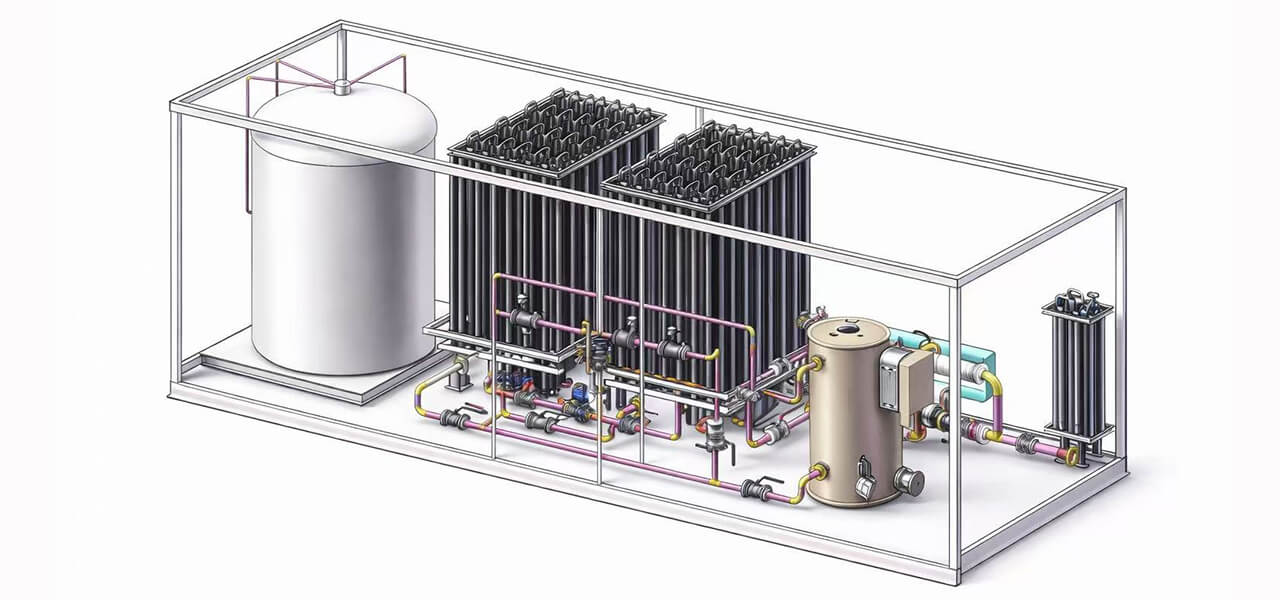
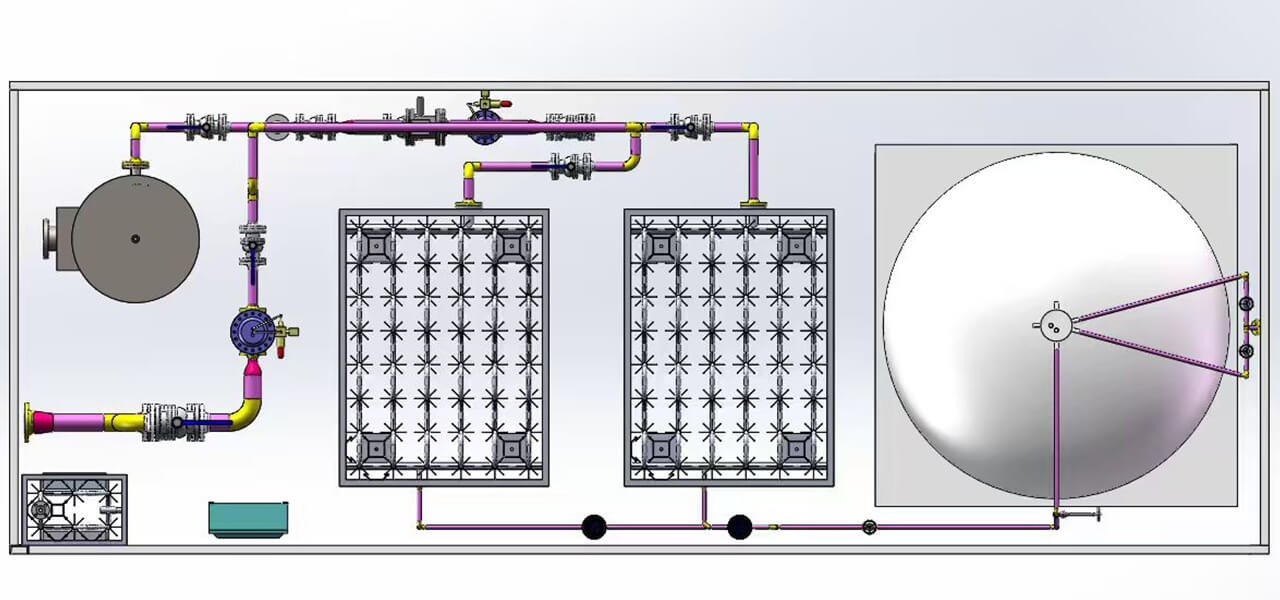
1. What Is a Single Skid-Mounted Regasification Skid?
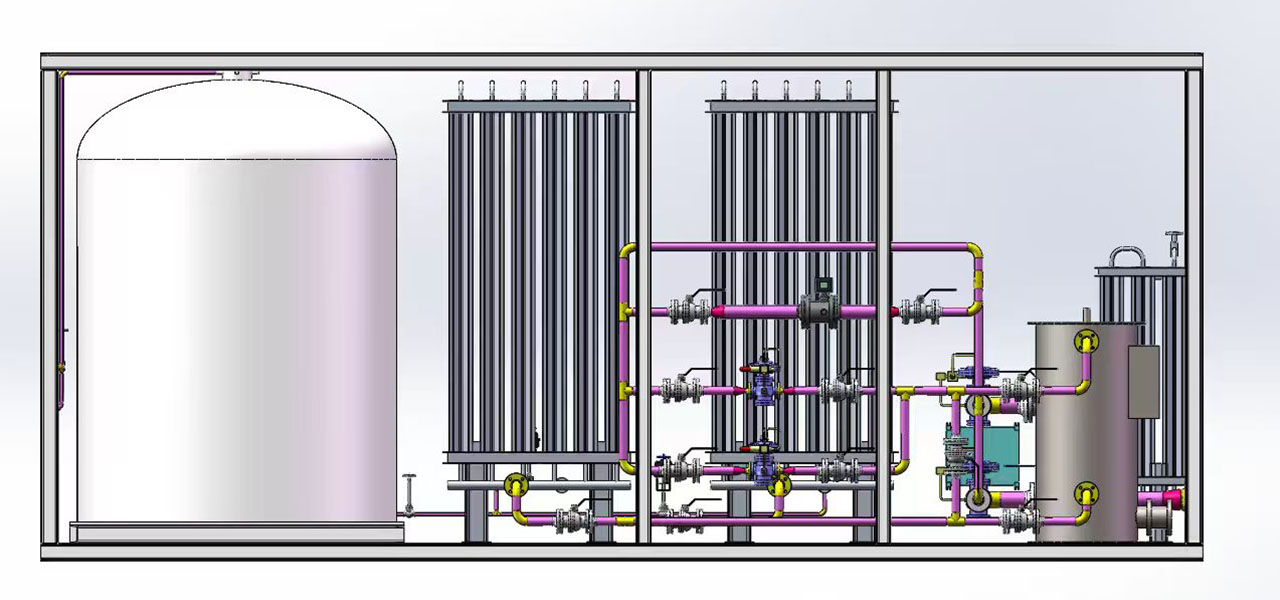
A single skid-mounted regasification skid typically integrates multiple functional units on one structural base, such as:
• LNG liquid handling and valve manifolds
• Vaporization equipment (ambient or water bath, depending on duty)
• Pressure regulation and safety devices
• Basic instrumentation and control interfaces
The core idea is integration: fewer interfaces, fewer site connections, and faster installation.
The Rule of Thumb: When a Single Skid Is Usually Suitable
Based on project experience (for reference only, not an absolute design standard), a single skid-mounted regasification configuration is generally suitable under the following conditions:
• LNG tank size ≤ 7.5 m³
• Regasification capacity ≤ 2,000 Nm³/h
(approximately 1.79 MMscfd)
Within this range, equipment dimensions, thermal duty, piping sizes, and safety distances can usually be managed without compromising operability or maintainability.
Why These Limits Matter (Engineering Rationale)
These thresholds are not arbitrary. They reflect practical engineering constraints:
• Thermal balance: As flow rate increases, vaporizer size and heat exchange surface grow rapidly, making compact integration difficult.
• Pressure drop control: Higher flow means larger piping and stricter layout requirements to avoid excessive pressure losses.
• Safety spacing: Larger inventories and higher duties increase fire and hazard zone requirements, which conflict with dense skid layouts.
• Maintenance access: Over-integrated skids often sacrifice accessibility, increasing long-term maintenance risk.
Beyond moderate scale, “compact” designs tend to shift complexity rather than eliminate it.
Commonly Overlooked Constraints
Many projects focus only on nominal flow rate, while overlooking other critical factors that directly affect skid feasibility:
• Peak flow factor and demand fluctuation
• Downstream pressure range and stability requirements
• BOG (boil-off gas) handling philosophy
• Unloading method (self-pressurization vs. pump unloading) and target unloading time
• Hazardous area classification and ventilation
• Future expansion or redundancy requirements
Ignoring these parameters often leads to oversized, inefficient, or operationally constrained skid designs.
When a Modular Configuration Is the Better Choice
A modular (separated) configuration is typically more appropriate when:
• LNG storage volume or regas capacity exceeds the “small + moderate” range
• N+1 redundancy or high availability is required
• Multiple downstream users or pressure tiers are involved
• Long-term expansion is expected
• Site conditions allow for proper spacing and phased installation
In such cases, modularization improves safety, flexibility, and lifecycle performance.
A Practical Selection Checklist
Before deciding on a single skid-mounted solution, it is advisable to confirm the following project parameters:
• Maximum hourly gas demand (peak flow)
• Required outlet pressure range
• LNG unloading mode and target unloading time
• Storage capacity and design days
• Available site space and safety constraints
• Power and utility availability
These inputs allow engineers to determine whether integration adds value—or introduces hidden risk.
Conclusion
Single skid-mounted LNG regasification skids are well suited for small tank volumes and moderate flow rates, particularly in fast-track Nigerian projects. However, integration should be a result of engineering evaluation, not a default preference.
Understanding the technical boundaries early helps ensure that simplicity at the front end does not become complexity during operation.
Project-specific parameters should always guide configuration decisions.