INSIGHTS
When to Use LNG vs CNG for Industrial Gas Supply?
Natural gas is widely used across industrial sectors for heating, power generation, and processing applications. For businesses without direct pipeline access, LNG (Liquefied Natural Gas) and CNG (Compressed Natural Gas) are two practical supply options.
However, selecting between LNG and CNG is not always straightforward. Each option has distinct characteristics in terms of storage, transportation, infrastructure, and operating cost. Understanding these differences is essential for making the right investment decision.
1. Understanding LNG and CNG
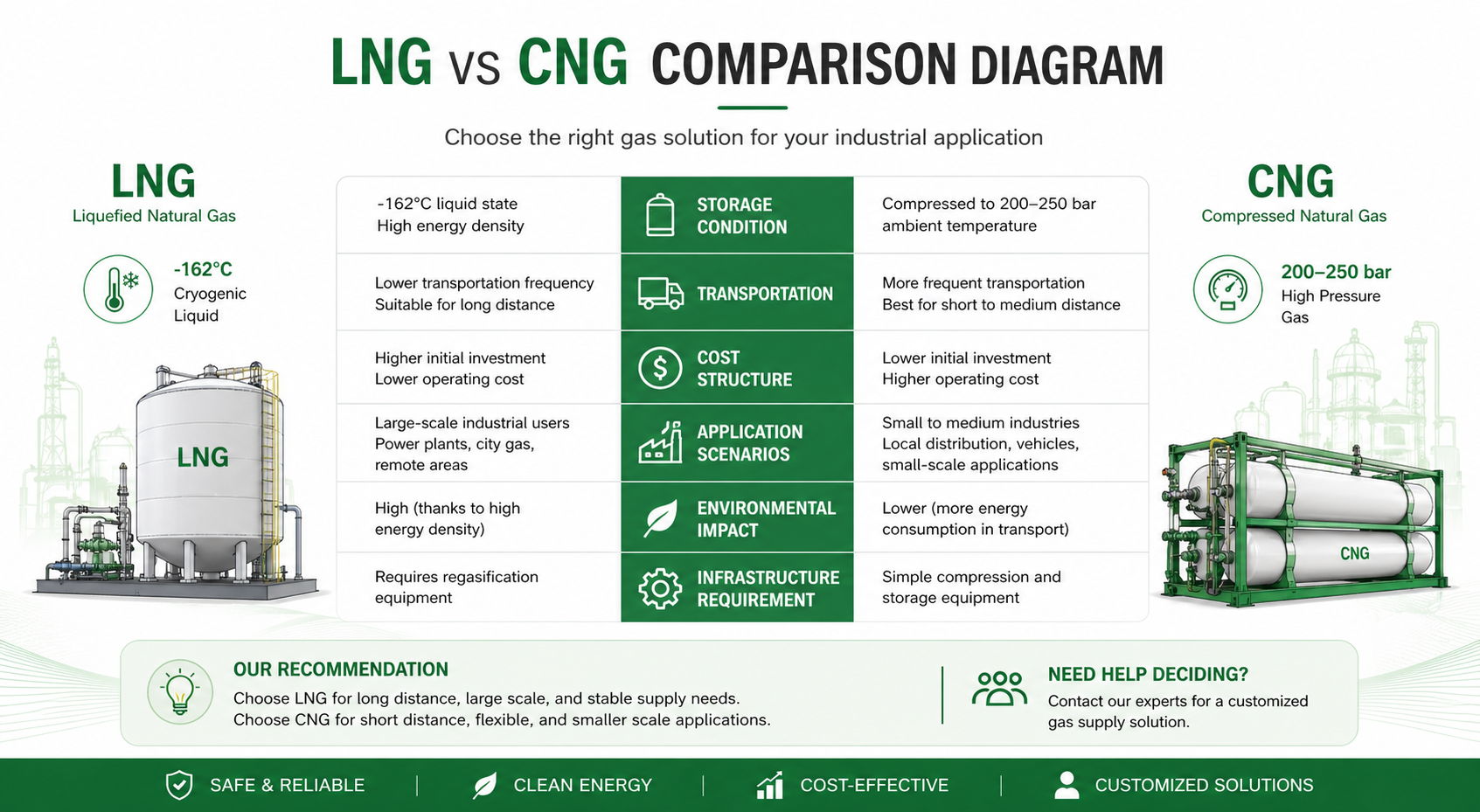
LNG is natural gas cooled to approximately -162°C, turning it into a liquid form. This allows for high-density storage and transportation over long distances.
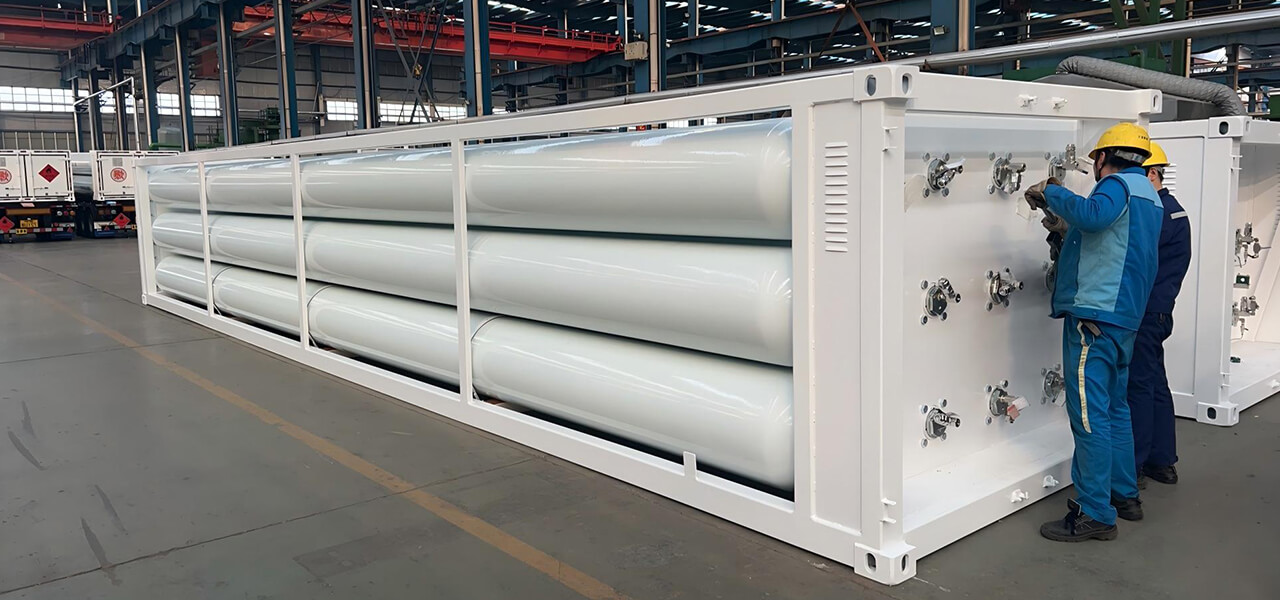
CNG, on the other hand, is natural gas compressed to high pressure (typically 200–250 bar), stored in cylinders or tube trailers.
2. When to Use LNG
LNG is generally the preferred option for medium to large-scale gas consumption. It is particularly suitable when:
- Daily gas consumption is high (e.g., industrial plants, power generation)
- The project requires stable and continuous gas supply
- The site is far from pipeline infrastructure
Due to its high storage density, LNG reduces transportation frequency and overall logistics cost.
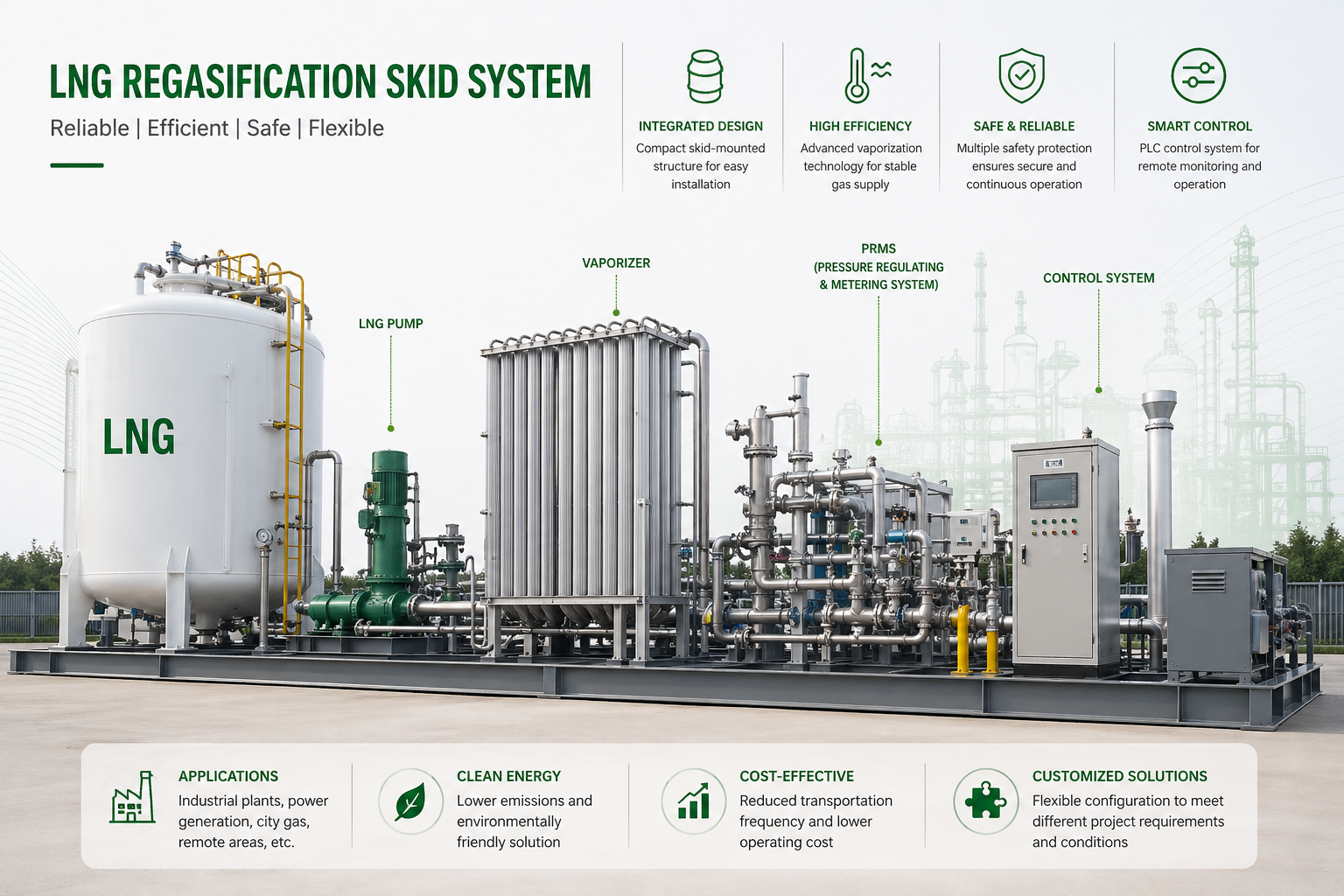
LNG Regasification Skid System
3. When to Use CNG
CNG is more suitable for small to medium-scale applications, especially when:
- Gas demand is relatively low or fluctuating
- Initial investment needs to be minimized
- The project requires flexible or mobile gas supply
CNG systems are easier to deploy and require less complex infrastructure.
4. Key Comparison Factors
When choosing between LNG and CNG, consider the following factors:
Consumption volume: LNG for large scale, CNG for smaller scale
Distance and logistics: LNG more efficient for long-distance transport
Investment cost: CNG lower initial cost, LNG better long-term efficiency
Storage and footprint: LNG requires cryogenic tanks, CNG requires cylinder space
5. Integrated Gas Supply Solutions
In many projects, LNG and CNG are not mutually exclusive. Hybrid solutions can be designed based on project requirements.
For example, LNG can be used for base-load supply, while CNG can serve as backup or peak shaving.
Conclusion
Both LNG and CNG offer reliable alternatives to pipeline gas supply, but their suitability depends on project-specific factors.For large-scale, continuous demand, LNG provides better efficiency and long-term cost advantages. For smaller or flexible applications, CNG offers a more economical and easier-to-deploy solution.
By evaluating your gas demand, logistics conditions, and investment plan, you can determine the most suitable solution for your industrial operation.